The aromatic herb of the Romans, cultivated throughout the Empire and so loved that the poets Pliny the Elder, Virgil (in his Moretum) and Ovid described it as a powerful aphrodisiac plant — one to avoid in medieval monastic gardens. (Modern science does not, of course, confirm this, but it's a story worth telling.)
Native to the Mediterranean basin and more specifically to the Italian peninsula, arugula (rucola or rughetta in Italian, rocket in British English, arugula in American English — linguistic variations that mark a later, more fragmented European spread than other aromatics) belongs to the great Brassica family, already well represented in our pages.
As a sprout and microgreen: small, distinctly lobed leaves (the signature of mature arugula, recognizable at first glance) on fine green-white stems sometimes tinged purple at the base. Concentrated classic arugula flavour: pungent, peppery, distinctively nutty, with a slightly bitter note — a unique aromatic signature that doesn't resemble any other Brassica already described (brown, yellow or wasabi mustards are more mustardy; broccoli is milder; red cabbage sweeter). Probably the most universally loved sprout in the family. Tender, fine texture — the mature version in miniature.
Use: anywhere mature arugula would shine, but in concentrated mode. On pizza margherita after baking, on pasta with pesto, on a gourmet burger, on a prosciutto-and-cheese sandwich, on a caprese salad, on bruschetta, or as a crown on a grilled steak drizzled with reduced balsamic.
Keep in mind: arugula microgreens lose their aromas within days of harvest — pick them when you're ready to use them.
- Soaking: not required (small seeds); optional 4-6 hours.
- Germination time: 2-3 days.
- Sprout harvest: 4-6 days after soaking begins.
- Microgreen harvest: 8-12 days after sowing.
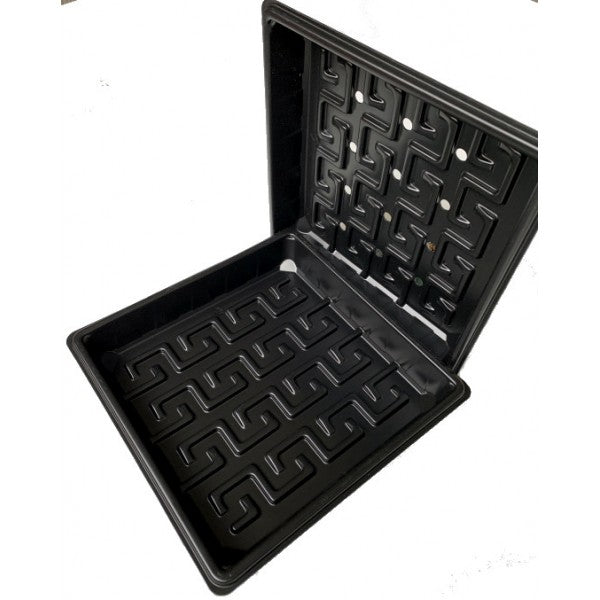
- Yield: about 1 tsp of seeds produces a 20 × 20 cm tray of microgreens.
- Best uses: pizza, Italian pasta, gourmet sandwich, Mediterranean finishes.