
Horticulture 101: How to Plant Seeds?
The first rule of thumb is to sow most seeds to a depth of one to two times its width to have the best chance of success. For larger seeds like pea, two to three times its width is best. For small seeds, all you have to do is place them on the surface of the soil and barely cover them with a thin layer of medium. For very small seeds, lay them on the surface of the soil and press them down without covering them with additional soil. 
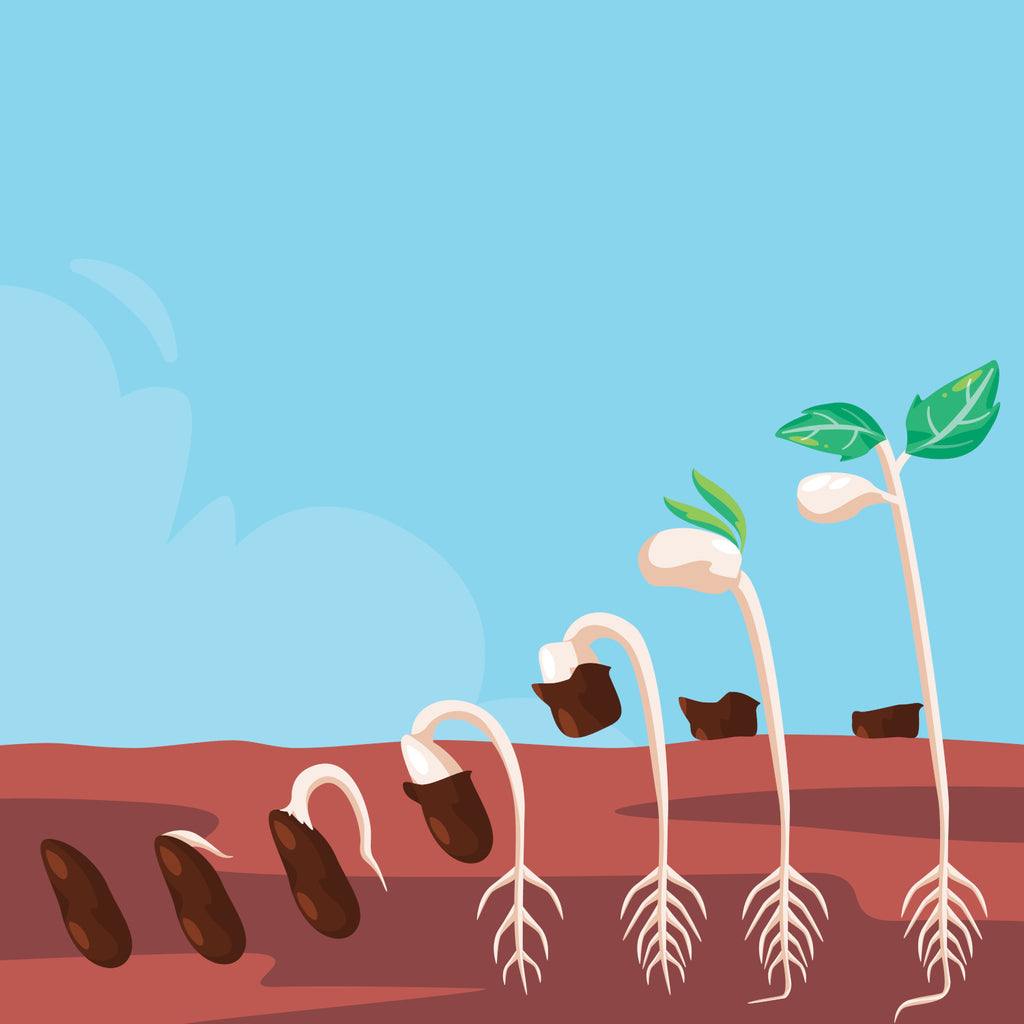
Why not deeper? Seeds contain all the energy and nutrients needed to produce a seedling, sustaining it until it is large enough to begin creating its own energy through photosynthesis. If the seed is sown too deeply, the seedling must fight through more medium before it feels the light on its leaves. It may run out of steam before breaking the surface, or once it emerges it may be weakened, and it is difficult to recover from a poor start to growth. 
Why not less deep? Just as some seeds need light to germinate, others prefer darkness, and sowing too shallow will increase the failure rate. The top layer of soil can also dry out more quickly, which interrupts the germination of many seeds that need moisture to germinate. And finally, shallow sowing can leave some taller plants with a less entrenched root system, increasing the risk of the growing plant collapsing under its own weight. 
Many plants germinate and grow even if sown at the wrong depth. After all, nature does not use a rule when seeds are scattered. But for healthy seedlings that produce strong mature plants, getting the right seeding depth will provide the best possible start. 
Related Posts
18
Dec
23
Nov
23
Nov