Capsicum annuum.
The classic pepper of Mexican cuisine — the one that structures most authentic salsas and green sauces: pico de gallo, salsa verde, salsa fresca, chili verde. Its Spanish name serrano means "of the sierra," referring to the mountains of the Sierra Madre Oriental, in the Mexican states of Puebla and Hidalgo, where the variety was developed by the Indigenous Nahua peoples several centuries ago — perhaps more than a millennium.
On the Scoville scale, serrano occupies a useful middle position: 10,000 to 25,000 units — clearly hotter than jalapeño (which peaks around 8,000) but less explosive than cayenne (which can reach 50,000). It's this "medium-hot, without excess" level that makes it the ideal ally of everyday cooking: hot enough to give character, not enough to ban conversation.
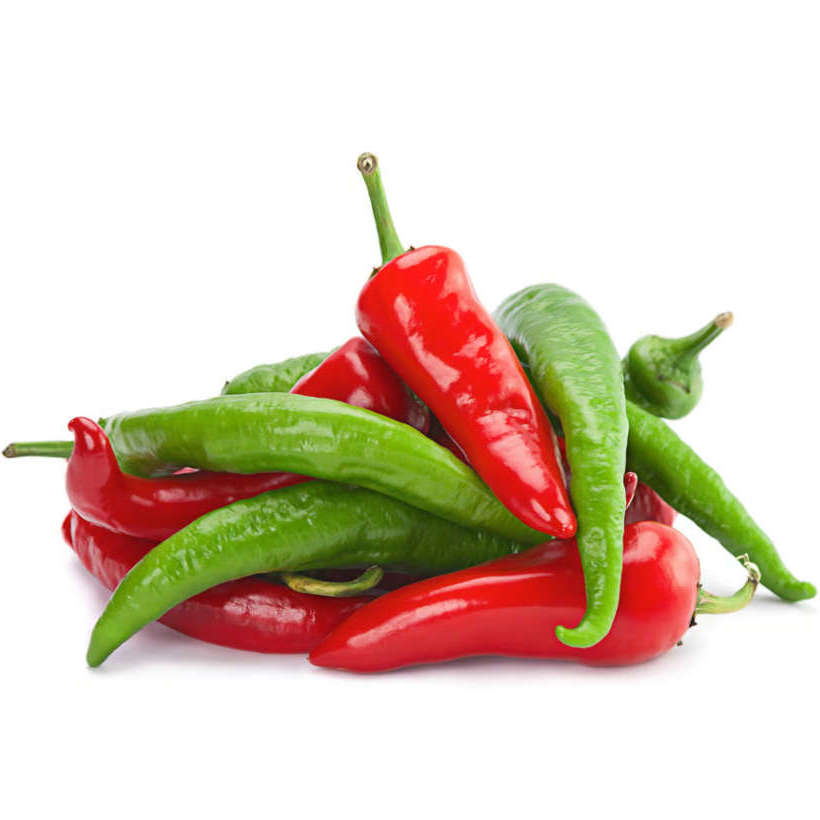
A vigorous, well-held plant 80 to 90 cm tall, particularly productive — a single well-established plant can yield 40 to 50 fruits over the season. Small, elongated, slim peppers 5 to 7 cm long by 1 to 1.5 cm across, with glossy skin of a uniform deep green that ripens to bright red at full maturity (most Mexican kitchens prefer to use it at the green stage, where it keeps its crunch and herbaceous freshness). Flesh thinner and less meaty than that of jalapeño, which makes it particularly suited to raw chopping in salsas — it releases less water and better keeps its texture.
A thousand Mexican uses: pico de gallo (tomato, onion, cilantro, finely chopped green serrano, lime, salt — the most classic Mexican fresh salsa), tomatillo salsa verde, guacamole with serrano instead of jalapeño for more heat, pickled in escabeche with carrots and onions, chopped in tacos al pastor, barbacoa, carnitas, and infused in micheladas (Mexican spiced beers). To moderate the heat, remove the seeds and the inner white membrane (the placenta) that concentrate the capsaicin.
Grower's tip: Like all peppers, serrano demands heat and a long season. Indoor start 8 to 10 weeks before last frost, at 25-28 °C on a heat mat. Transplant once nights are stable above 12 °C — early to mid-June in Québec. Give it the warmest spot in the garden (south wall ideal). Harvest the green fruits as soon as they reach 5-7 cm long and the skin takes on a glossy sheen; leave some fruits on the plant until red for maximum flavour (and for dry storage).
Tip: serrano freezes particularly well whole — wash, dry, freeze spread on a sheet pan, then transfer to airtight bags for year-round use (grate on a microplane while frozen to instantly release the heat into a sauce or simmered dish).
- Open-pollinated. Mexican heirloom variety. Largely self-fertile, but crossings possible with other Capsicum annuum nearby (sweet peppers, jalapeños, cayenne, other hot peppers), so isolate or bag the flowers for seed saving.
- Height: 80 to 90 cm.
- Maturity: 65 to 75 days after transplant for green fruits, 80 to 90 days for red.
- Exposure: full sun, warmth.
- Rich, well-drained, warm soil. Space plants 40 to 50 cm apart.
- Indoor start 8 to 10 weeks before last frost. Transplant once all risk of frost is past (early to mid-June in Québec).