Capsicum annuum.
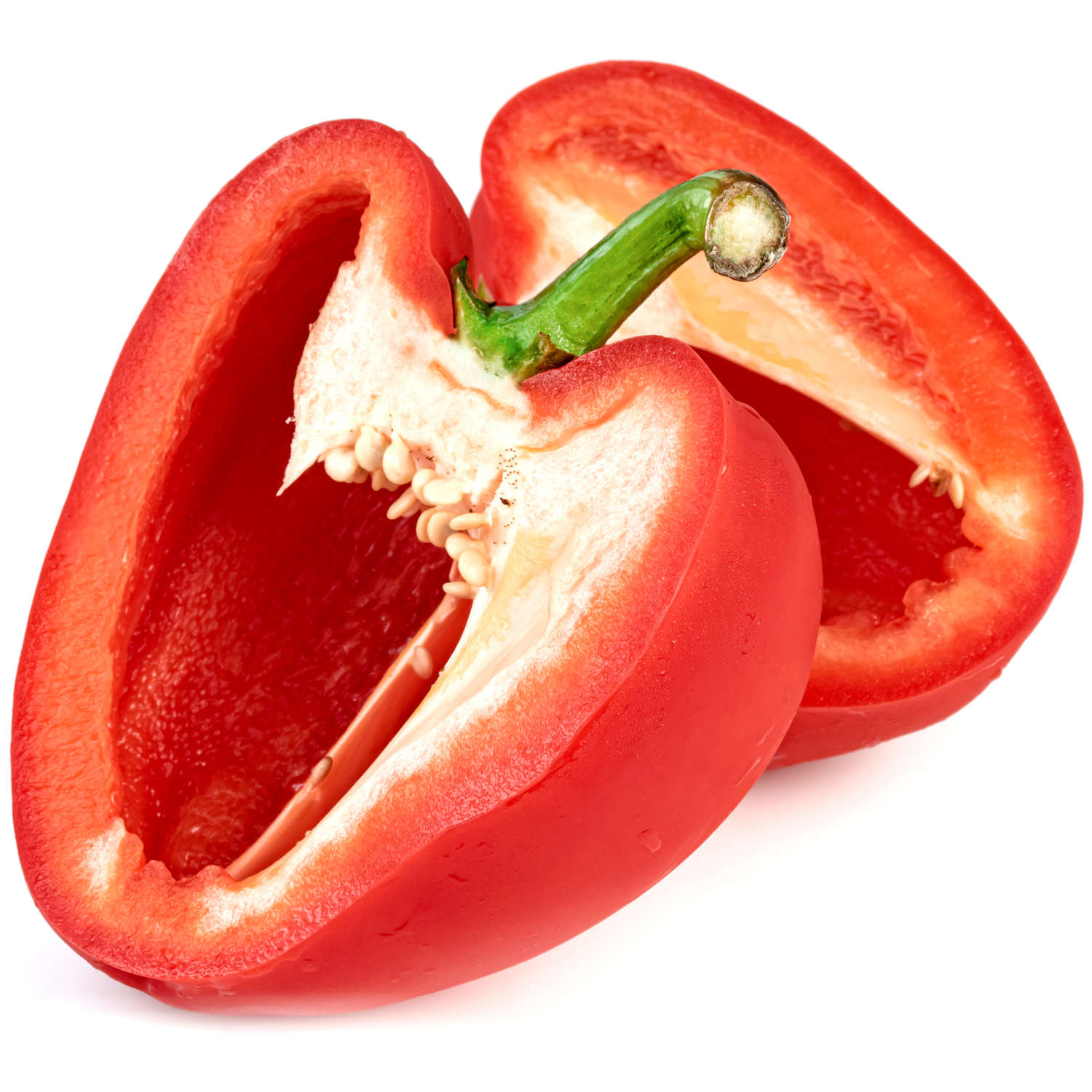
The sweet pepper with the unmistakable silhouette — a fleshy, scarlet red heart, slightly flattened, with a domed base and a rounded tip. The name "pimento" comes simply from the Spanish pimiento, which designates any sweet pepper in Castilian, but in Anglo-American cooking it has specialized to designate these round-squat varieties with thick, particularly sweet flesh — famous for two emblematic uses: the small red flesh tab inserted into stuffed green olives (the eternal Spanish apéritif), and the famous pimento cheese of the American South — a spread of cheddar, mayonnaise and chopped pimentos that is to South Carolina what rillettes are to Touraine. It's also from related pimento varieties that Hungary and Spain prepare their dried and ground paprikas.
Compact, robust plant 60 to 90 cm, which produces in peak season 15 to 20 fruits per plant. Thick, juicy walls; particularly aromatic and naturally sweet flesh, completely devoid of heat (zero Scoville). It's probably the most aromatic sweet pepper you can grow: round, fruity, almost vanilla-tinged flavour at full red maturity. So good plain that you tend not to want to cook it too hard — raw-grated in a salad, cut in strips in a sandwich, blended into Andalusian gazpacho, marinated in olive oil and garlic for antipasto jars, roasted and peeled then marinated as Spanish piquillos, or simply chopped into homemade pimento cheese.
For drying and transformation into paprika, hang the whole ripe fruits in strings in open air in an airy, dry spot — the homemade version of sweet paprika has an incomparable perfume.
Grower's tip: Like all peppers, pimento wants heat and a long season; indoor start 8 to 10 weeks before last frost, at 25-28 °C on a heat mat. Transplant once nights are stable above 12 °C (early June in Québec). Pimentos sometimes have a reputation for being a little slower to ripen than other sweet peppers — give them the warmest spot in the garden (south wall ideally) and exercise patience. Harvest the fruits still green for storage or quick cooking, or leave on the plant until deep red for maximum flavour and paprika drying.
- Open-pollinated. Largely self-fertile, but crossings possible with other Capsicum annuum (sweet peppers, other hot peppers) nearby — isolate or bag the flowers for seed saving.
- Height: 60 to 90 cm.
- Maturity: 75 to 85 days after transplant for green fruits, 90 to 100 days for red.
- Exposure: full sun, sheltered from wind.
- Rich, well-drained, warm soil. Space plants 40 to 50 cm apart.
- Indoor start 8 to 10 weeks before last frost. Transplant once all risk of frost is past (early June in Québec).