A cousin of the Allium genus (along with chives, garlic chives and onion), leek offers a similar microgreen with a distinct flavour. Allium ampeloprasum is a Mediterranean species cultivated since antiquity — the Egyptians ate it already 3,000 years before our era (the pyramid workers were fed leeks, onions and garlic, according to Herodotus), and the Roman emperor Nero, it is said, had himself served boiled leek every day to preserve his amateur-singer's voice, to the point that he was nicknamed porrophagus, "leek-eater."
As a microgreen: fine, upright, tender-green shoots, similar to those of onion but as a flatter, broader blade (leek has flat leaves in the adult state, unlike the hollow cylindrical leaves of onion). Flavour noticeably milder and more delicate than onion microgreen, with an almost sweet, almost creamy note that already recalls leek melted in cooking. Tender, lightly crunchy texture.
Gastronomic use: garnish on vichyssoise (cold leek-and-potato soup — the absolute mother-child visual effect), on pan-seared salmon, on seafood risotto, on tartare or ceviche to soften, on French-style leek fondue.
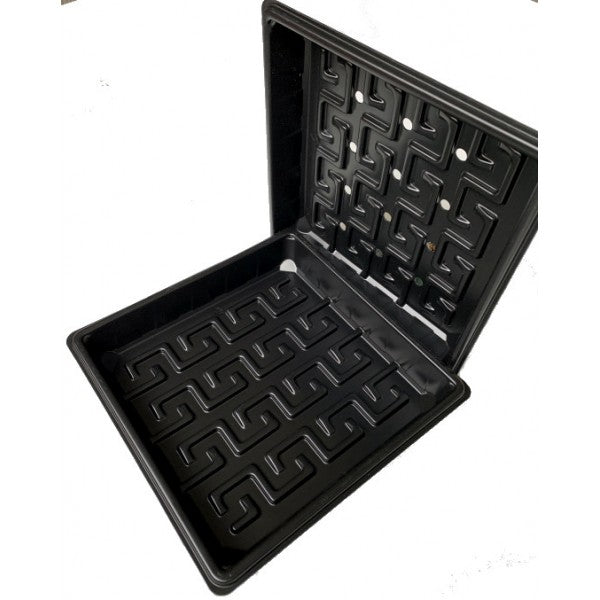
Practical note: like onion microgreens, not suited to jar sprouting — seeds too slow — reserve for tray culture.
- Soak: not required.
- Germination time: 7 to 14 days (slow).
- Microgreen harvest: 14 to 21 days after sowing.
- Yield: about 2 teaspoons of seeds produces a 20 × 20 cm tray of microgreens.
- Best use: vichyssoise, refined dishes, mild garnishes.