
|

Shopping Cart

0

Your shopping bag is empty

Go to the shop
|
Close

Garden Cress — Sprouting & Microgreen Seeds

$6.99

One of humanity's most ancient cultivated plants, already mentioned in texts of ancient Egypt, in Dioscorides' Materia Medica in the 1st century, and in the writings of Hippocrates, who recommended it for its digestive and purifying properties. Not to be confused with watercress (Nasturtium officinale), which grows in water; garden...

QT

One of humanity's most ancient cultivated plants, already mentioned in texts of ancient Egypt, in Dioscorides' Materia Medica in the 1st century, and in the writings of Hippocrates, who recommended it for its digestive and purifying properties. Not to be confused with watercress (Nasturtium officinale), which grows in water; garden cress is a terrestrial Brassica native to the Near East (Iran, Egypt).

It's also probably the plant we grew in a kindergarten dish on damp paper towel — its rapid germination makes it the great classic of school science experiments. Extremely pungent and mustardy flavour, closer to horseradish than to watercress, with a fresh herbaceous finishing note. Tender, fine, fragile in the mouth.

Classic use: the British egg and cress sandwich (chopped hard-boiled eggs and cress sprouts on buttered white bread — the eternal English tea-time sandwich); as a bold garnish on a tartare or fresh cheese; mixed with other sprouts to give them character; or simply scattered like a living pinch of pepper on an avocado toast.

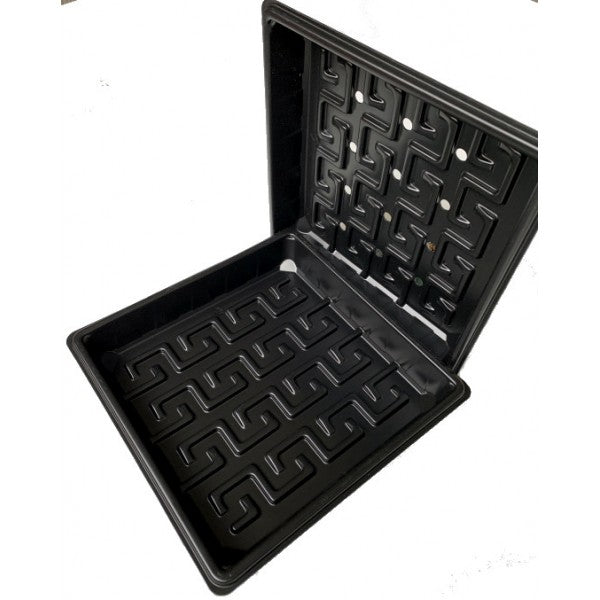
One quirk: as with the basil seed already described, cress seed turns mucilaginous on contact with water — better grown in a tray than a jar.

  • Soaking: NOT recommended (mucilaginous seeds).
  • Germination time: 1-2 days (one of the fastest).
  • Microgreen harvest: 7-10 days after sowing.
  • Yield: about 1 tsp of seeds produces a 20 × 20 cm tray of microgreens.
  • Best uses: sandwiches, peppery garnishes, the living equivalent of cracked pepper.