Fagopyrum esculentum.
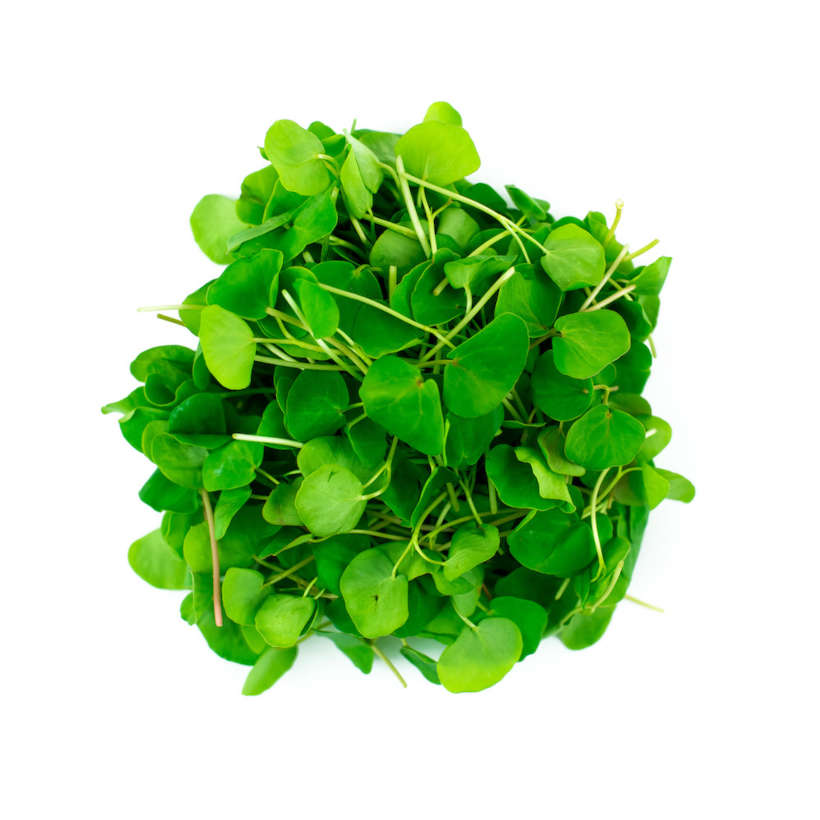
One of the most spectacular microgreens in the world — large heart- or kidney-shaped cotyledon leaves, 3 to 5 cm across, in luminous tender green, carried on translucent pink-red stems. The visual effect is striking: a mini-landscape of tiny palm trees with two-toned fronds. But behind the looks lies a fascinating history and botany. Buckwheat isn't actually a grain, despite its name — it does NOT belong to the grass family (Poaceae) that groups wheat, kamut, barley, oats and rice. It's a pseudo-cereal in the Polygonaceae family, the same as rhubarb and sorrel. This partly explains its great culinary asset: entirely gluten-free, which makes it one of the rare grains accessible to people with celiac disease.
Native to East Asia (the Tibetan and Chinese regions), buckwheat has been domesticated for about 6,000 years. In Québec it carries deep cultural weight — the sweet or savoury buckwheat galette, inherited from Breton cuisine and adapted by French settlers, is one of the great dishes of traditional Québécois heritage.
Microgreen flavour: mild, fresh, slightly lemony and herbaceous, with a finishing note recalling young alfalfa or clover leaves (which share related flavours). Juicy, crisp texture — surprisingly substantial.
Culinary uses: excellent as a main green in a full salad (not just a garnish); on cream cheese toasts; as a colourful touch on cream soups; mixed with other microgreens for a colourful blend; on blinis with smoked salmon and sour cream (buckwheat being the flour of traditional blinis as well — mother-and-child visual and flavour echo); as a topping on sweet or savoury buckwheat galettes.
- Soaking: 8-12 hours in warm water before sowing.
- Germination time: 2-4 days.
- Microgreen harvest: 8-12 days after sowing.
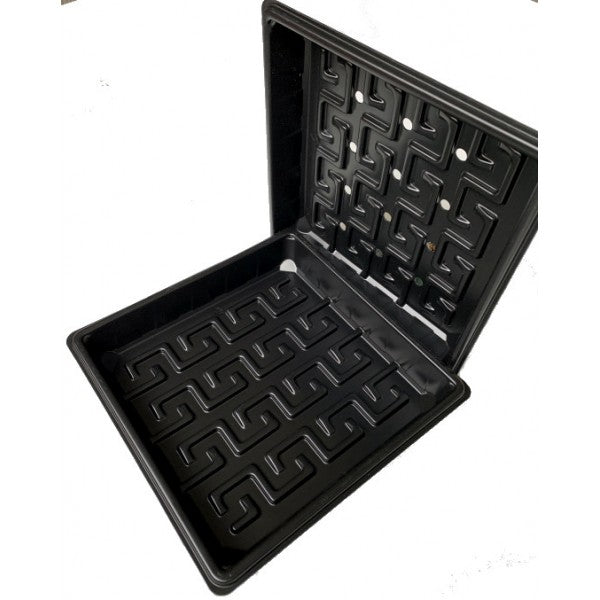
- Yield: about 1 cup of hulled seeds produces a 20 × 20 cm tray of microgreens.
- Best uses: full salads, blinis with smoked salmon, cream soups, topping for buckwheat galettes.